Monday, 11 January 2021

Busting Myths 6 - All Medium Fit Saddles Are The Same Width


There are many myths that have been going around with regards to saddlery and the use thereof. In this series of posts, I endeavour to show most of them are without foundations and can, in some cases, be the opposite of the actual facts.


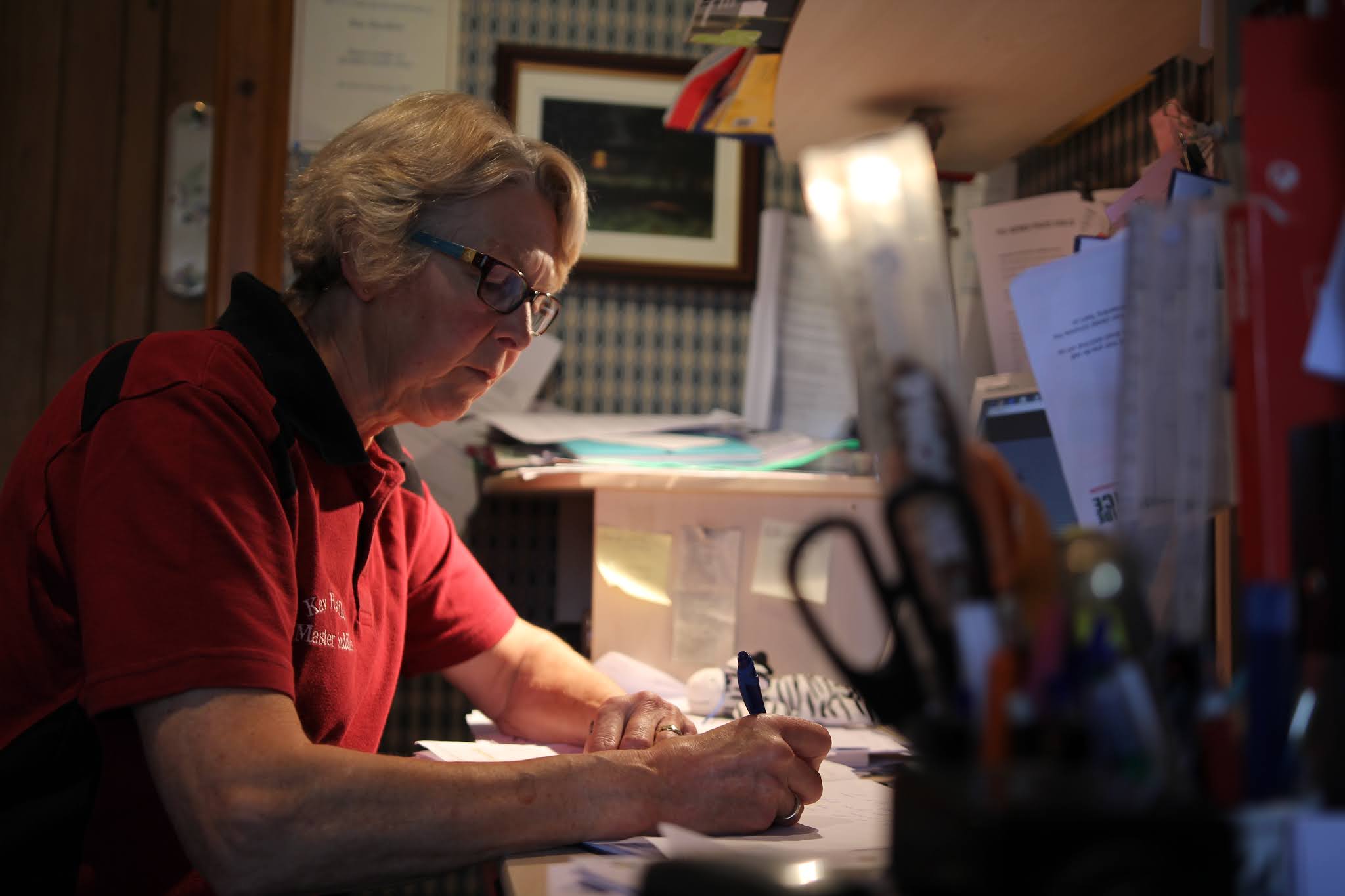
Pictured left is author Kay Hastilow, Master Saddler and Master Saddle Fitter.


I have said medium fit, but here the same is true of all width fittings, whatever they might be.

I hear people say, ‘my horse is a medium fit’ and they expect that as a saddle fitter, you will pull out a variety of this width for them to chose from, expecting them all to fit the same; in fact expecting them all to fit! Nothing could be further from the truth. In British standard BS 6635/2015 a ‘medium fit’ is between 85 to 94.9 degrees – a massive 10-degree difference in one width fitting! It’s the same for all other widths as well. This is very helpful to a saddle fitter as all horses vary and it may be that a slightly wider ‘medium’ will fit the horse better than a slightly narrower ‘medium’ one.

If only this was all there is to it! The front of the tree, the head, incorporates the points, which is the part that comes down either side of the back just behind the shoulders. These tree points can be of different length and they can even be lengthened if necessary if you are having a saddle made for you. Why is this important? The longer the points, the more support there is for the saddle, so if you have a horse with a high wither you will need more length and a deeper cut panel to keep the saddle up off the spine. If you put this saddle on another horse with an identical width measurement but who has more development behind the shoulder, this same saddle will sit up miles above the horse and be totally unsuitable.

We also have to take into consideration the shape of the horse’s back and what shape (not width) of tree would best suit him. Open, U, ‘hooped’ tree? Fine if your horse has a very rounded back, all be it that he still measures ‘medium’, but if he is more V-shaped then such a shape of tree will be a disaster. It will only follow his back shape in a couple of places so not support the saddle in its side-to-side movement. Often it will drift over to one side and stay there, which will be really uncomfortable for him.  Conversely, a V head on a rounder backed horse will likewise only follow his shape in two small areas either side, causing excess pressure in these areas of his back. It is also likely to be pretty unstable – not a nice thought!

These are just some of the factors that a SMS qualified saddle fitter will be taking into consideration when fitting for you, so it may well be that they have a van full of medium fit saddles but only bring out one or two for you to see and try. It may also be why, when you ask for a particular make of saddle they refuse to fit that make for your horse. For what ever reason, they know that it will not fit. Don’t be offended if such a thing happens – they aren’t just ‘trying to sell you a dearer / their own/ different saddle’ for their own benefit. Rather, they know that such a saddle will lead to discomfort and loss of performance, possibly poor behaviour or injury to your horse. Would you really want or expect them to do that? I, and I know many other SMS saddle fitters, have walked away from a sale in such situations. We refuse to do anything that could cause pain or discomfort to your horse. Would you want it any other way?

Understanding more about saddles and saddle fitting has the potential to help you improve your horse's comfort, performance and also long-term soundness - and you can now do that whenever fits into your busy lifestyle.
With online learning and training now credibly established as 'the new normal', Kay's highly acclaimed and informative 2-part video series continues to sell around the world since its launch in 2019. Aptly titled Saddle Fitting Know How - For Riders and Trainers, the two videos distil her 50 years of experience into over an hour of what is an unrivalled go-to resource for all Riders and Trainers interested in saddles and saddle fitting. They contain a wealth of information that will be of practical relevance to everyone serious about riding, competing and training others.
 
Watch a brief trailer and buy securely online for unlimited streaming or downloading to your device at

https://vimeo.com/ondemand/saddlefittingknowhow

Wednesday, 6 January 2021

Busting Myths 5 - Contact Of The Saddle


There are many myths that have been going around with regards to saddlery and the use thereof. In this series of posts, I endeavour to show most of them are without foundations and can, in some cases, be the opposite of the actual facts.


Pictured right is author Kay Hastilow, Master Saddler and Master Saddle Fitter.


When a saddle fitter fits a saddle to a horse you will see them run their hands between the horse and the saddle’s bearing area. This is to check that the pressures are even throughout its length and that there are no hollows or tight spots (which would be adjusted before continuing on to riding in the saddle). You will notice that this is done before girthing up and getting a rider on board and we do not check here again once the rider is seated in the saddle.

It annoys saddle fitters intensely when a riding instructor or friend feels down the front of the saddle with the rider on board and pronounces that ‘the saddle is too tight. Look – I can’t get my hand through here!’ I would be extremely worried if they could as the front of the saddle beneath the tree points (in common with the rest of the panel) should be supporting and distributing the weight and pressures evenly from the rider and saddle. If you can run your hand down under the tree point area with a rider on then the panel isn’t doing its intended job and the saddle must be being supported somewhere else, in this case usually by the stirrup bars and girth webs which is already the area of highest pressure from the saddle. This can increase the pressures to such an extent that the horse’s comfort and ability to perform will be severely compromised.

Sometimes we see horses with prominent shoulders and if the saddle is of a straighter cut, say VSD or dressage it will look as if the saddle is buried in the back of the shoulder, but this not the case. The saddle could well be resting on the rib cage and comfortably padded by the panels as we wish, but the protruding shoulders give a false impression. So long as the shoulders aren’t restricted by the saddle in movement, this is perfectly acceptable.

SMS Qualified Saddle fitters strive to get an even pressure throughout the bearing area of the saddle and the proof that we achieve this is in much of the research work using the Pliance pressure testing system to a strict protocol. There is far more to correctly fitting a saddle than many people realise, so if your fitter is SMS qualified and is working in a thorough and professional manner, please believe them when they say that the fit is as it should be.


Understanding more about saddles and saddle fitting, has the potential to help you improve your horse's comfort, performance and also long-term soundness and you can now do that whenever fits into your busy lifestyle.
With online training now credibly established as 'the new normal', Kay's highly acclaimed and informative 2-part video series continues to sell around the world since its launch in 2019. Aptly titled Saddle Fitting Know How - For Riders and Trainers, the two videos distil her 50 years of experience into over an hour of what is an unrivalled go-to resource for all Riders and Trainers interested in saddles and saddle fitting.
Watch a brief trailer and buy securely online for unlimited streaming or downloading to your device at

https://vimeo.com/ondemand/saddlefittingknowhow

Tuesday, 29 December 2020

Busting Myths 4 - Stretching The Legs


There are many myths that have been going around with regards to saddlery and the use thereof. In this series of posts, I endeavour to show most of them are without foundations and can, in some cases, be the opposite of the actual facts.

Pictured left is author Kay Hastilow, Master Saddler and Master Saddle Fitter.


We are often told that when we girth up we should stretch each foreleg right forward ‘to remove any wrinkles in the skin.’ 

Well, you will achieve that but in the process you will pull a large wadge of flesh in front of the girth and trap it there as the girth will block it and prevent it from moving back to its rightful place. This can lead to discomfort for the horse and girth galls, the opposite of what we thought we were doing.

If you walk your horse for a few paces after girthing up and before mounting, this will smooth the skin out without trapping any forward of the girth.

Simples.

With online training now credibly established as 'the new normal', Kay's highly acclaimed and informative 2-part video series continues to sell around the world since its launch in 2019. Aptly titled Saddle Fitting Know How - For Riders and Trainers, the two videos distil her 50 years of experience into over an hour of what is an unrivalled go-to resource for all Riders and Trainers interested in saddles and saddle fitting.
Watch a brief trailer and buy securely online at

https://vimeo.com/ondemand/saddlefittingknowhow


Wednesday, 23 December 2020

Busting Myths 3 - Research And Claims For Saddlery

Kay Hastilow Master Saddler and Master Saddle Fitter

There are many myths that have been going around with regards to saddlery and the use thereof. In this series of posts, I endeavour to show most of them are without foundations and can, in some cases, be the opposite of the actual facts. 

Pictured left is author Kay Hastilow, Master Saddler and Master Saddle Fitter.

 
Companies trying to sell their products have many ways to tempt us to become customers, sometimes recommendations from well-known riders but more often nowadays we are seeing claims stating the ‘research shows’ or something similar. Now, as any regular followers will know, I am all in favour of proof and testing of products, but all ‘research’ isn’t equal.

Proper believable research should have been undertaken using a fixed protocol so that the testing has been repeated and is repeatable in exactly the same way, coming up with the same results whosoever does this work.

All testing should be done with different horses and riders being tested in different combinations and in a different order, often over a number of days. Testing done with just one or two horses really isn’t anything more than information to be considered and should be treated as such. Work undertaken to be peer reviewed and published by the British Equine Veterinary Association is usually expected to use a minimum of 10 sound horses and several different riders over a number of days, dependant on the study being undertaken. Such work is truly believable whereas much that I see really hasn’t been ‘proven’ to my mind.

In any credible testing scenario, it is essential that the following guidelines have been followed:-

1.      The operators must understand the equipment being used and know how to use it correctly.

2.      The equipment must be of a high enough resolution to be accurate, (in the case of pressure testing) and that equipment must have been scientifically and independently verified (as should any equipment being used in any research.) It should be video synched to the pressure testing as this is essential to interpreting what you have seen. (a horse tripping, for instance will show a change to the pressure readings). 

3.      It must have been ‘zeroed’ on the surface that is to be tested (the horse’s back) immediately before any testing being undertaken here, and then again for every different horse and rider combination.

4.      The operator must be experienced enough to correctly interpret the results seen.

All are all necessary for any successful testing or research.

If you see claims being made for a product, or to try and establish a fact regarding horses / riders/ tack, please ask exactly what protocols were in place and what experience the operators of the testing equipment have. Do not be fobbed off with a statement such as ‘A study using a host of experts’ or the like. Ask for the full facts and, if they are not willing to share that information with you, ask yourself how much store you can put by their claims.

With online training now credibly established as 'the new normal', Kay's highly acclaimed and informative 2-part video series continues to sell around the world since its launch in 2019. Aptly titled Saddle Fitting Know How - For Riders and Trainers, the two videos distil her 50 years of experience into over an hour of what is an unrivalled go-to resource for all Riders and Trainers interested in saddles and saddle fitting.
Watch a brief trailer and buy securely online at

https://vimeo.com/ondemand/saddlefittingknowhow


Wednesday, 9 December 2020

Busting Myths 2 - Clearance to Saddle

There are many myths that have been going around with regards to saddlery and the use thereof. In this series of posts, I endeavour to show most of them are without foundations and can, in some cases, be the opposite of the actual facts.

Pictured left is author Kay Hastilow, Master Saddler and Master Saddle Fitter

When lecturing, one of the questions that I ask the attendees is “How much clearance should there be at the front of a saddle?” Answers usually range from three to four fingers, a fist and various other suggestions, although three fingers is the most common reply. I then ask them “Why? What is so special about three fingers?”  If you get five people together and ask them to compare the measurement of their fingers if being used as a gauge of clearance you will quickly see that there can be as much as 3cm / 1” difference between different folk so that really isn’t much of a guide.

In the Society of Master Saddlers, we state that the amount of clearance that you need is “sufficient, so that neither the top nor the sides of the spinal processes are in contact with the saddle throughout its length when being ridden in.” This can differ greatly from horse to horse and many other factors have to be taken into consideration. If the horse has a very high wither, trying to get 2 to 3” of clearance, is a difficult task that in many cases will result in the saddle tipping back drastically. This is difficult to correct and the use of some rear riser pads to counter this will just end up with pressure to the top and sides of the spinal processes – the one thing that we are trying to avoid! Better to have the front of the tree clear enough to prevent touching when the saddle is being ridden in, but not much more.

Remember that the clearance has to be right through the saddle, back seam as well as the front and, particularly with high withered horses, be sure to check well back in the head of the saddle as often it will be touching the spine at about T8 or 9 (about 4 to 5” back from the front edge of the pommel) although the actual head is clear.

With a broader horse it should be no problem to get plenty of clearance, probably more difficult to get close enough to make you feel as if you are part of the horse rather than being perched some way above it. Not a nice feeling. Many saddles are designed to sit closer to this type of horse, which can aid stability as well as getting you more as one with your horse. Clearance though is still required but remember ‘sufficient’ is the yardstick to work too.

 With online training now established as 'the new normal' Kay's highly acclaimed and informative 2-part video series continues to sell around the world since its launch in 2019. Aptly titled Saddle Fitting Know How - For Riders and Trainers, these two videos distil her 50 years of experience into what is an unrivalled resource for all Riders and Trainers interested in saddles and saddle fitting.
Watch a brief trailer and buy securely online at
https://vimeo.com/ondemand/saddlefittingknowhow